
The Gentile Mission Wins Recognition
Acts of the ApostlesThis flow follows the Gentile mission from improvised encounters to a church-wide decision about belonging and practice.
increasing Bearing strength in each event
 decreasing
Bearing strength in each eventdecreasingCornelius Seeks Peter

Two Visions Arrange a Meeting
A Gentile officer prays
Cornelius, a Roman centurion drawn to Israel’s God, receives instructions to send for Peter. His religious life already includes prayer and almsgiving, though he has not fully entered Judaism.
Peter is prepared
Peter’s vision of animals challenges his categories of purity. The messengers arrive as the vision’s meaning begins to emerge: the encounter concerns people as well as food.
The Spirit Falls on Gentiles
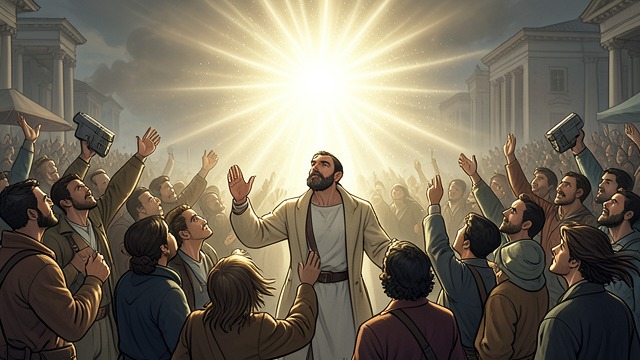
Experience Precedes Approval
A familiar sign in a new setting
As Peter speaks, the Holy Spirit falls on the Gentile listeners. Their response recalls the earlier Pentecost and unsettles any assumption that the Spirit belongs only to Jewish believers.
Baptism follows recognition
Peter asks how water can be withheld from people who have received the same gift. Their baptism gives public form to a belonging that the community did not initiate.
Jerusalem Challenges Peter

Eating Together Becomes the Issue
Criticism exposes a deeper question
Some believers criticize Peter for entering a Gentile home and eating with Gentiles. The immediate complaint points to a larger uncertainty about whether uncircumcised believers can fully belong.
Peter narrates the evidence
Peter recounts the visions, the Spirit’s arrival, and the witnesses who accompanied him. The community falls silent and acknowledges that God has given Gentiles repentance leading to life.
Antioch Expands the Work

Grassroots Mission Takes Hold
A new center appears
Believers reach Antioch of Syria, where some begin preaching to Greeks as well as Jews. Many respond, and the community develops without waiting for a single missionary plan.
Jerusalem sends Barnabas
Barnabas recognizes the development as God’s work and brings Saul to help. The Antioch community becomes a base for a broader Gentile mission and mutual support across communities.
The Council Defines Terms
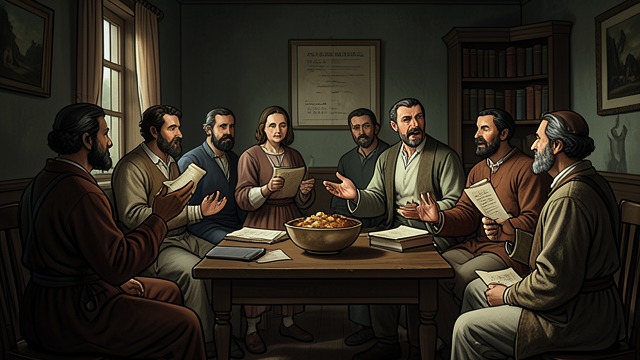
Inclusion Becomes a Deliberate Decision
The dispute is argued openly
Some believers insist Gentile converts must be circumcised. The Jerusalem council hears Peter, Paul, Barnabas, and James, weighing experience, testimony, Scripture, and reasoning.
A Jewish core is retained
The council does not require circumcision but asks Gentiles to observe selected practices that support shared life. Its letter formalizes a way for Jewish and Gentile believers to remain in one community.
Before Peter leaves Joppa for Caesarea
During Peter’s speech at Cornelius’s house
After Peter returns from Caesarea
After persecution disperses believers northward
At the Jerusalem council after the first missionary journey
